

Soap Calculator

Build a soap recipe, choose your lye type and water method, and get exact lye, water, and batch weights.

1. Type of Lye

2. Weight of Oils

lb

3. Water

4. Additional Settings

%
oz

5. Select Oils, Fats, and Waxes

OneAll

Oils, Fats and Waxes

6. Recipe Oil List

Oil Name%Weight (lb)
Total 0% 0

Scroll down to view your recipe.

7. Recipe Summary

Add oils to the recipe list, with percentages totaling 100%, to see the full recipe summary.

Sodium hydroxide and potassium hydroxide are caustic and cause severe burns. Wear goggles, gloves, and appropriate safety equipment.

  • Sodium hydroxide (NaOH) is used for hard bar soap; potassium hydroxide (KOH) is used for liquid or soft soap.
  • The two have different saponification values, so you can't substitute one for the other 1:1. Always recalculate the recipe for the lye type you're actually using.
  • You can set your water amount three ways: as a percentage of your oils, as a lye concentration percentage, or as a water-to-lye ratio. They all describe the same thing, just calculated differently, so pick whichever method you're used to.
  • A lower lye concentration (more water) gives a softer batter with more working time; a higher concentration (less water) speeds up trace and can shorten cure time.
  • Superfat is the percentage of oils left un-saponified on purpose, for skin conditioning and as a safety buffer against measuring errors. 5% is a common starting point for cold process soap.
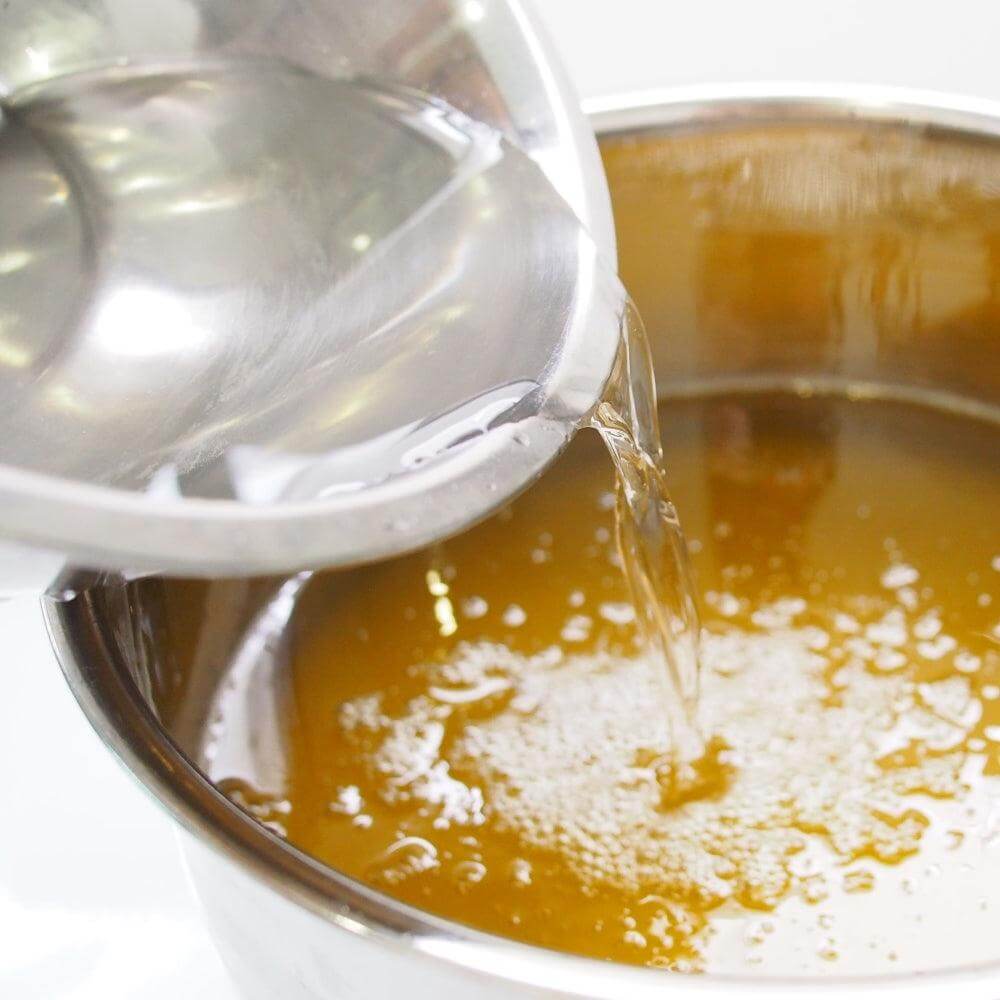
  • Always add lye to water, never water to lye. Adding water to lye can cause a dangerous, fast exothermic reaction that boils over.
  • Wear goggles, gloves, and long sleeves any time you're handling lye, and work in a ventilated area.
  • Saponification values are estimates based on published data for each oil and can vary slightly by supplier or batch. For a brand-new recipe, double-check your numbers before pouring.
  • Want more on handling lye safely, plus what to do if it touches your skin? See our Lye Safety FAQ.