

Why Did My Red Soap Turn Beige, Orange or Brick?
Short answer: red is the hardest color to keep true in cold process soap. The usual culprit is the colorant itself: carmine breaks down in lye and turns beige or tan, and pure dyes and lakes shift to orange, salmon or pink. After that, look at your base oils, your fragrance (vanillin), how much colorant you used and how warm the soap got. The color it turned and when you noticed it will usually tell you which one it was.
Start with the colorant
Check what you colored with before anything else. The colorant tells you most of what will happen in cold process.
Carmine turns red beige
Carmine, also listed as cochineal, carminic acid, Natural Red 4 or CI 75470, is made from crushed cochineal insects, so it isn't vegan. It's common in cosmetic micas because it gives a beautiful raspberry red in lipstick and makeup. It can't survive the high pH of cold process soap. Lye breaks the carmine down, and the red changes to the mica's base color: beige, tan, oatmeal or a faded dusty pink. This often happens within hours, in the mold. No amount of extra colorant fixes it, because the problem is chemical.
If you see beige, check the label for carmine first. It's the most common reason a red mica that looked perfect in the bag comes out of the mold the color of oatmeal. None of Nurture's reds contain carmine.
Pure dyes and lakes don't work in cold process
Pure dye and lake powders, like Red 40, Red 27 and Red 28, don't survive the high pH of cold process soap. They morph, usually to orange, coral or pink, fade over the cure, and bleed into neighboring layers and swirls. This isn't just a red problem: a pure blue lake or dye, for example, turns purple in cold process. Water-soluble dyes are great in melt and pour, where there's no lye to change them. Lakes are oil soluble, so they don't work in melt and pour either.
Resin and craft micas often shift
Many inexpensive micas from craft stores and marketplaces are made for resin, nail art or melt and pour, where there's no lye. In cold process they often turn orange, pink or brown. If a colorant doesn't say it's tested for cold process soap, assume it isn't.
Red iron oxide holds, but it's brick, not bright red
Red iron oxide (CI 77491) is completely stable in soap: it doesn't fade, morph or bleed. But its natural color is a warm brick, rust or maroon. A mica colored only with iron oxide will never give you a fire-engine red. If you wanted bright red and got brick, and the label lists only mica and iron oxide, the colorant did exactly what it's supposed to do.
Other things that change red
Yellow oils push red toward orange
Red plus yellow is orange. Olive oil (especially green or extra virgin), unrefined avocado, hemp and unrefined shea give the batter a golden or green-gold tint before you add any color. A red that's true on a white base looks warm, orange or brick on a golden one. Refined, pomace or light olive oil gives a paler base.
Vanillin browns red to brick
Fragrances that contain vanillin (vanilla, many bakery, gourmand, amber and some floral scents) slowly turn soap tan to dark brown over days and weeks. Brown over red reads as brick, rust or chocolate-red. Higher vanillin means more browning. Check the fragrance's discoloration note on its product page before pairing it with a bright red, or use a vanilla color stabilizer in the fragrance portion.
Too little color or titanium dioxide turns red pink
Red needs more colorant than most colors to look saturated. Too little reads as pink, coral or orange-pink. Titanium dioxide added to the red lightens it toward salmon. Don't add titanium dioxide to make red brighter: it fades color, it doesn't make it pop. On the other hand, far too much colorant can tint the lather.
Gel and temperature change how deep red looks
Soap that gels fully usually shows the deepest, brightest red. Soap that doesn't gel looks paler and duller. A partial gel leaves a darker, more saturated center and a lighter, often more orange ring around the edge. Very hot soap, from an overheated mold or a fast-moving fragrance, can darken or cook some colorants.
Clumped colorant leaves specks
Red pigments clump. Powder added straight to batter can leave dark specks and streaks while the rest of the bar looks lighter than expected.
What color did it turn?
- Beige, tan, oatmeal or dusty pink: carmine. If the label has no carmine and the change came over weeks, vanillin browning on a light red.
- Orange, coral or salmon: a pure dye or lake, a mica made for resin or melt and pour, or a yellow base oil.
- Pink: too little colorant, titanium dioxide added to the red, or a pure dye or lake shifting in the lye.
- Brick, rust or maroon: an iron-oxide red (that's its true color), vanillin, or a yellow base.
- Dark or brownish red: vanillin or overheating.
- Dark center, lighter edges: partial gel.
- Specks or streaks: colorant wasn't dispersed.
- Red bleeding into white layers: a pure dye or lake.
- Red lather or a stained washcloth: too much colorant.
When did you notice it?
- Right away, while pouring or in the mold: the colorant reacting to lye. Carmine, pure dyes and lakes, and resin micas usually show it here. A yellow base shows from the first pour too.
- When you cut it (1–2 days): gel and temperature, or not enough colorant now that the bar has set and lightened. Carmine that started fading in the mold is often fully beige by now.
- During cure (the first few weeks): vanillin browning is the usual suspect. Pure dyes keep fading here too.
- After it was fully cured: light fading from sun or bright display lights. Iron oxides and reds made for cold process hold up best.
How to fix it next batch
- Choose the right colorant. Skip anything with carmine or CI 75470, and don't use pure dyes or lakes. Choose a red made and tested for cold process.
- Disperse first. Mix about 1 teaspoon of colorant into 1 tablespoon of lightweight oil (sweet almond, sunflower or fractionated coconut) and blend until smooth.
- Use a pale base. Swap extra virgin olive oil for refined or pomace, or lower the olive oil in red batches.
- Choose the fragrance carefully. Pair bright reds with fragrances that have zero or low vanillin, or add a vanilla color stabilizer.
- Use the full amount. Use the colorant's recommended rate, and leave titanium dioxide out of the red portion. It fades color; it won't make red brighter.
- Gel it. Insulate the mold or set it on a heating pad for a full gel, and watch for overheating with fast-moving fragrances.
- Test small. Try a new red in a few ounces of batter before a full batch.
- Store out of the sun. Cure and display bars away from direct sunlight.
Nurture reds for cold process
None of our reds contain carmine. These are made and tested to hold their color in cold process:
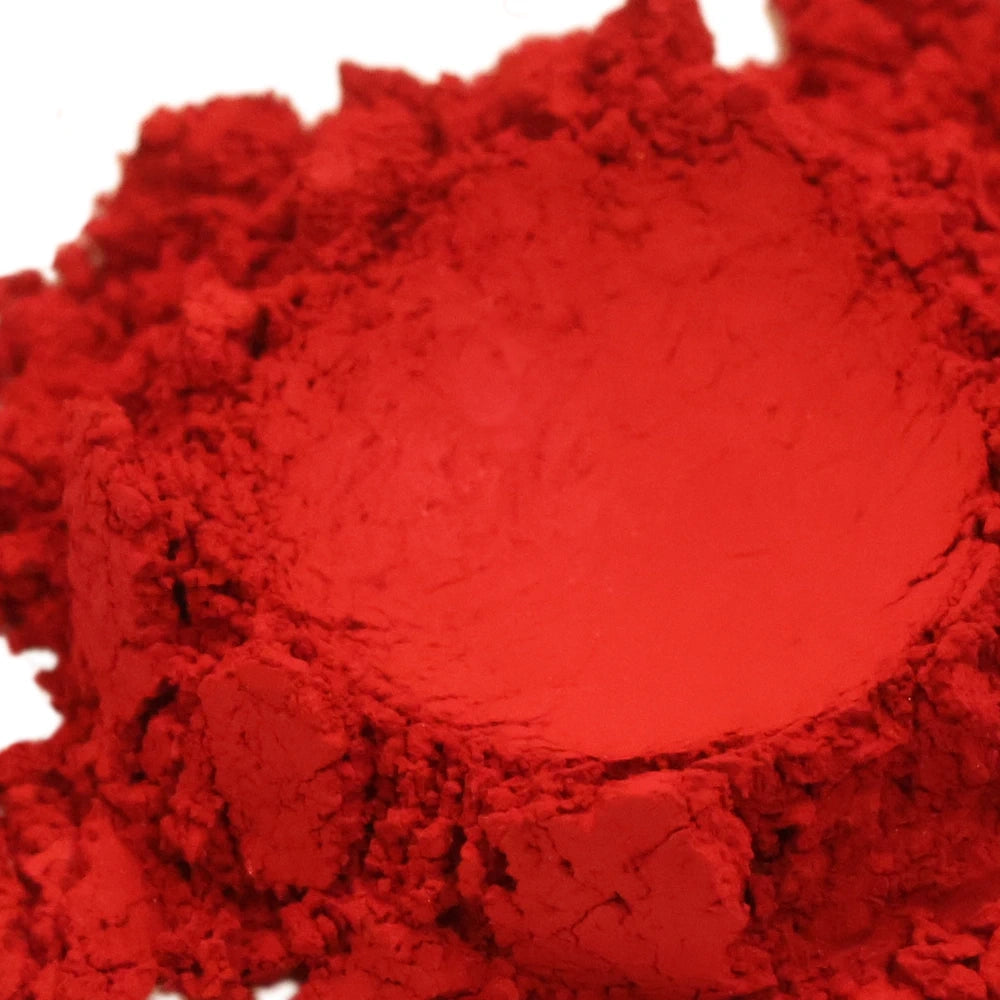
- Burn Notice Red: our truest, most saturated red. It holds the shade through cure without orange creep or pink fade. Use 1.5–2 teaspoons per pound of oils in cold process (0.25–0.5 teaspoon per pound in melt and pour).
- Trial by Fire Red: survives saponification and settles to a warm, brick-toned red. Choose it for a classic warm red.
- Ruby Red, Red Vibrance and Rum Punch Red: rock-stable deep, earthy and maroon reds. They won't morph, fade or bleed, but they won't be bright.
- Really Red!: holds a bright red in cold process. It can migrate a little into light swirls, so it's best in solid bars or next to darker colors.
Reds that shift in cold process, like Firecracker Red (softens to pink), and our water-soluble red dyes are still beautiful in clear melt and pour.
Still not sure what happened?
Send us photos of your bar, the colorant you used and the color you expected. A Nurture color expert will look at your colorant, recipe, fragrance and timing, tell you what changed and what to use next time. Send it to Color Rescue or email your photos to support@nurturehandmade.com.