


PureScent Fragrance
Strong, long-lasting scent, made without the ingredients you don't want.
Every PureScent oil leaves out phthalates, known carcinogens, mutagens and reproductive toxins, and added California Prop 65 ingredients. PureScent+ goes a step further and leaves out suspected ones too.
Choose your tier
Both tiers share the same core standard. PureScent+ adds two things: no suspected ingredients, and our full documentation set.
PureScent
Strong scent with no known toxins. If an oil contains a suspected ingredient, we name it on the product page so you can decide for yourself.
- Made without phthalates
- No known carcinogens, mutagens or reproductive toxins
- No added California Prop 65 ingredients
- No acute or organ toxin at 1% or more
- SDS, IFRA certificate and allergen statement
- Tested in cold process and melt and pour soap
PureScent+
For when you want no suspected ingredients at all, candle testing, or full documentation for what you make.
- Everything in the PureScent standard
- No suspected carcinogens, mutagens or reproductive toxins
- Certificate of Analysis and Technical Data Sheet
- Also tested in candles
PureScent vs PureScent+
| Standard | PureScent | PureScent+ |
|---|---|---|
| Made without phthalates | ||
| Made without added California Prop 65 ingredients | ||
| Made without known carcinogens, mutagens, and reproductive toxins | ||
| No organ-toxin ingredient at 1% or more | ||
| No toxic or fatal acute-toxin ingredient (GHS Category 1-3) at 1% or more | ||
| Made without Lyral (HICC), musk ketone, and methyl salicylate | ||
| Vegan, no animal testing (true of every fragrance we sell) | ||
| SDS, IFRA certificate, and allergen statement | ||
| Tested in cold process and melt and pour soap | ||
| No suspected (unconfirmed) carcinogens, mutagens, or reproductive toxins | ||
| Certificate of Analysis (CoA) and Technical Data Sheet (TDS) | ||
| Also tested in candles |
What every PureScent oil leaves out
The most important part of the standard is what is not in the formula.
Carcinogens
Substances known to cause cancer.
Mutagens
Agents known to change genetic material (DNA).
Reproductive toxins
Chemicals known to interfere with reproductive health.
Organ toxins
No ingredient classified as causing adverse effects or disease in specific organs at 1% or more of the formula.
Toxic or fatal acute toxins
No ingredient classified as toxic or fatal after a single exposure (GHS acute toxicity Category 1-3) at 1% or more. Either tier may still carry the lowest acute rating, a "harmful if swallowed" or "harmful if inhaled" warning (Category 4).
Phthalates
Every PureScent and PureScent+ oil is made without them.
Added Prop 65 ingredients
Neither tier adds any ingredient on California's Proposition 65 list. Some essential oils naturally contain beta-myrcene, which is on the list; it is present only as part of those natural oils.
Restricted fragrance materials
Neither tier uses Lyral (HICC), musk ketone, or methyl salicylate.
Vegan and cruelty-free
Every fragrance oil we sell, PureScent or not, is vegan and never tested on animals.
See every ingredient and group we leave out in the PureScent Exclusion List →
Known vs suspected ingredients
Carcinogens, mutagens, and reproductive toxins are grouped together as CMRs. Fragrance ingredients are reviewed by the Research Institute for Fragrance Materials (RIFM), which flags ingredients as either confirmed or suspected CMRs.
A suspected ingredient is one where emerging research has raised a potential concern that still needs further study.
See every suspected ingredient we check for in the PureScent Suspected Ingredient List →
Why we keep essential oils
Essential oils tend to fade and give a much lighter scent in soap, wax and many other uses, but their benefits are unmatched. To get both performance and authenticity, we blend natural essential oils and ingredients with safe synthetic fragrance components, so our scents stay strong, long-lasting and consistent.
Many essential oils contain components often labeled as "suspected" health hazards. We reviewed the science behind these concerns and found that the amounts naturally present in essential oils are typically hundreds, and often thousands, of times lower than levels shown to cause harm.
So we had a choice: remove essential oils entirely, or keep them and name any suspected component openly. We chose to keep them. PureScent+ goes a step further and leaves suspected ingredients out entirely.
Suspected health hazards found in essential oils
Skin sensitizers
May cause allergic skin reactions: cinnamon (leaf and bark), clove, cassia, lemongrass, citronella, ylang ylang, tea tree, Peru balsam.
Skin, eye or respiratory irritants
Peppermint, eucalyptus, oregano, thyme, black pepper, rosemary.
Aspiration or systemic toxicity
Especially if swallowed: wintergreen (high in methyl salicylate), birch, camphor, pennyroyal (generally avoided).
Photosensitizers
Increase sensitivity to UV light: bergamot (unless FCF), lime (cold-pressed), lemon (cold-pressed), grapefruit, bitter orange.
Avoiding every suspected hazard would mean giving up much of what natural essential oils offer. That is why both tiers remove all known toxins instead, and why we name any suspected ingredient on the product page rather than hide it.
Check any oil yourself
Every product page links to the oil's Safety Data Sheet (SDS). Open it and go to Section 2, "Hazards Identification."
Look at the pictograms
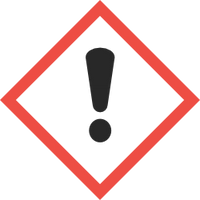
Exclamation mark
Can appear on either tierMay cause mild to moderate effects, such as skin or eye irritation, allergic skin reactions, respiratory irritation, or temporary drowsiness or dizziness. It appears on almost every fragrance and essential oil SDS.
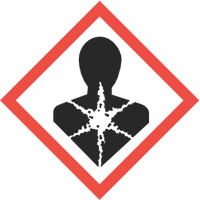
Health hazard
PureScent with a suspected ingredientA person with a starburst on the chest: a chemical is known or suspected to pose long-term health risks. It can also appear on either tier for an aspiration hazard (H304), a warning about swallowing the undiluted oil.
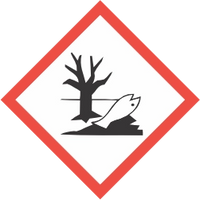
Environmental hazard
Can appear on either tierA dead fish and tree: the substance is hazardous to the environment, particularly aquatic life, and may cause long-term damage.
Look for H341, H351 or H361
These codes mark a suspected carcinogen, mutagen or reproductive toxin. A PureScent+ oil has none of them. Here is Section 2 for one oil from each tier.
All Souls Day

Section 2 lists H361, Suspected of damaging fertility or the unborn child, shown with the health hazard pictogram. All Souls Day includes distilled lime oil, which naturally contains gamma-terpinene, a suspected ingredient. That makes it PureScent rather than PureScent+.
Its other warnings, the exclamation mark (H317, H319) and the environmental hazard pictogram (H411), can appear on either tier.
See All Souls DayOatmeal, Milk & Honey

Section 2 lists only H317, May cause an allergic skin reaction, and H411, Toxic to aquatic life with long lasting effects: the exclamation mark and the environmental hazard pictogram. There is no H341, H351, or H361, and no suspected ingredient in the formula, so it is PureScent+.
See Oatmeal, Milk & HoneyPerformance in both tiers
Every PureScent oil is tested in cold process and melt and pour soap. PureScent+ oils are also tested in candles.
Cold process soap
The ultimate test for a fragrance. We test every scent in-house and publish performance notes on acceleration, discoloration and scent retention over time, so you have a reliable baseline. We still recommend your own small test batch.
Melt and pour soap
Formulated to blend into glycerin bases without clouding or separating, keeping both the clarity of the base and the scent intact.
Candles and wax PureScent+
Formulated for a clean burn and strong scent throw in soy and paraffin wax blends.
Soap or candle? Each oil's IFRA certificate shows its maximum usage in Category 9 (Soap) and Category 12 (Candles), so you can see at a glance where a scent fits.
Documentation by tier
Hazards are listed in Section 2 of each SDS, and ingredient composition in Section 3.
- SDSSafety Data SheetLists the oil's hazards, pictograms, and composition.
- IFRAInternational Fragrance Association certificateMaximum safe usage for each product category, such as soap, lotion or candles, to prevent skin irritation, allergies and other health issues.
- AllergenEU Allergen StatementIdentifies and discloses fragrance ingredients known to cause allergic reactions in some people.
- CoACertificate of AnalysisVerifies the quality, identity and consistency of the oil, confirming it meets its specifications.
- TDSTechnical Data SheetKey product data, including our no animal testing, vegan, phthalate-free and no contaminants statements.