



Fragrance Oil FAQ
Fragrance oil gets a lot of questions, some about what it actually is, some about whether it's safe, and some about how to use it. Here are quick answers, with links to full deep-dives where it makes sense.
What Is Fragrance Oil?
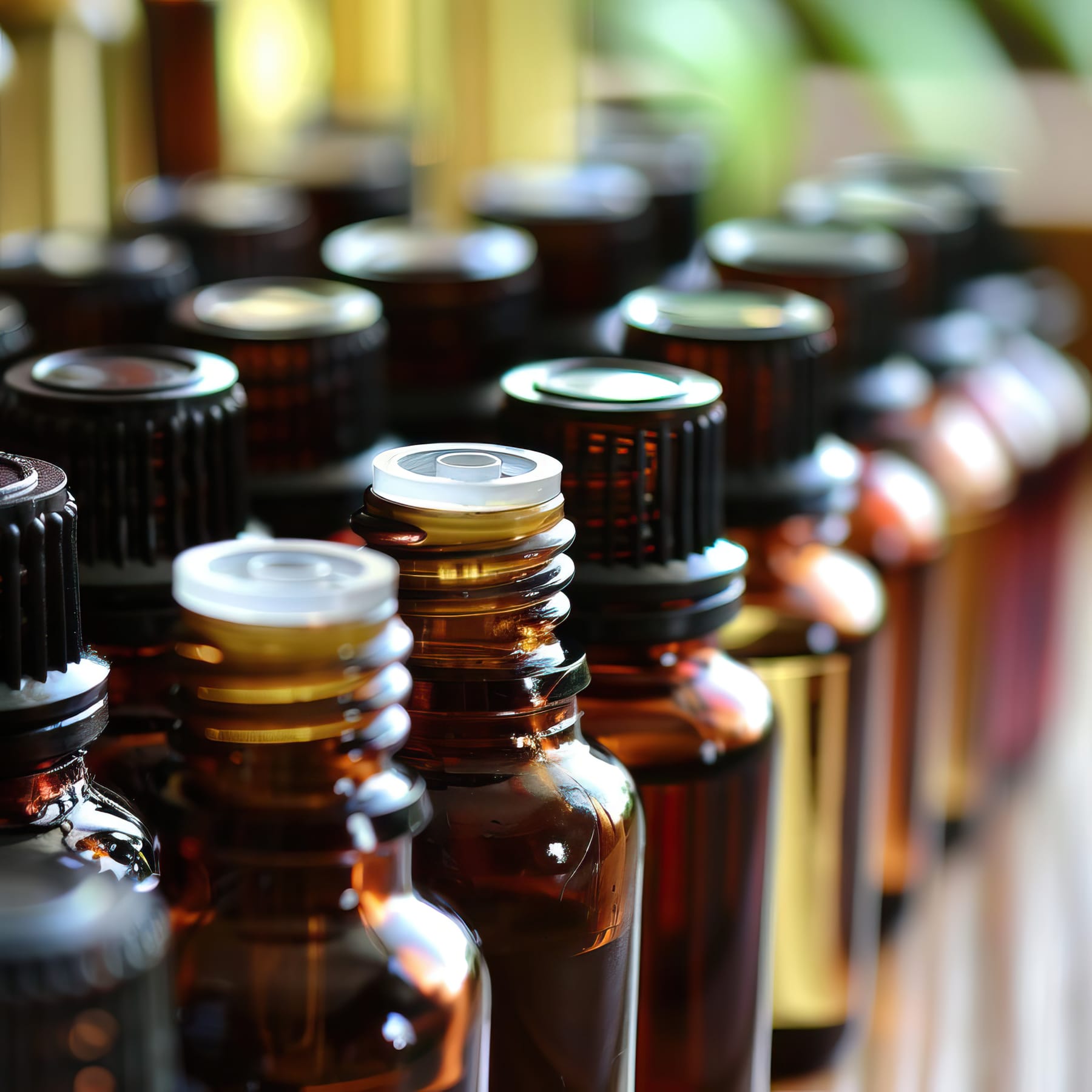
Fragrance oil is a manufactured scent blend made from aroma compounds, which can be synthetic, naturally derived, or a mix of both. Unlike a plant-derived essential oil, fragrance oil is formulated by a perfumer to hit a specific scent profile, including scents that don't exist as essential oils at all, like clean linen, birthday cake, or rain. It's used to add scent to soap, candles, lotion, and other bath and body products.
What Is Fragrance Oil Made Of?
Fragrance oil is a blend of aroma compounds, which may include synthetic aroma chemicals, naturally derived isolates, and sometimes a portion of essential oils, combined to create a specific smell. The exact formula is usually proprietary to the fragrance house, but a fragrance oil's Safety Data Sheet and IFRA documentation list any restricted ingredients and how much of the fragrance can safely be used in a given product. We provide both documents on each fragrance oil's product page.
Is Fragrance Oil the Same as Essential Oil?
No. Essential oils are extracted directly from a single plant, through steam distillation or cold pressing, so they're limited to whatever that plant actually smells like. Fragrance oils are formulated blends of aroma compounds that can replicate a plant's scent, combine several notes together, or create a smell that doesn't exist in nature at all. Fragrance oils also tend to be more consistent from batch to batch, and often hold their scent better in soap and candles than straight essential oils do.
Is Fragrance Oil the Same as Perfume Oil?
Not exactly, though the two terms get used loosely online. "Fragrance oil" is the broad term for any manufactured scent blend, used across soap, candles, lotion, and more. "Perfume oil" usually refers to a fragrance oil that's specifically formulated and diluted to be worn on skin as a personal fragrance. Not every fragrance oil is made or tested for that kind of direct, prolonged skin contact, so check a product's approved uses before wearing one as perfume.
Is Fragrance Oil Safe?
Used as intended, yes. Reputable fragrance oils are formulated to meet IFRA (International Fragrance Association) guidelines, which set maximum safe usage rates by product category, and come with Safety Data Sheet documentation covering any handling precautions. The key is making sure a fragrance oil is actually rated for the product you're making, since a rate that's safe for candles isn't automatically safe for something applied to skin. Our Fragrance Calculator and each product's IFRA documentation can help you stay within safe limits.
Is Fragrance Oil Toxic?
Used within its labeled and IFRA-approved rates, fragrance oil is not considered toxic. Like most concentrated aroma compounds, undiluted fragrance oil can irritate skin or eyes on direct contact and isn't meant to be ingested, so keep it out of reach of kids and pets in its raw form. Once it's properly diluted into soap, lotion, or candle wax at the recommended usage rate, it doesn't pose a toxicity concern for normal use.
Is Fragrance Oil Safe on Skin?
Many fragrance oils are, but not automatically all of them. Skin-contact use, in soap, lotion, or perfume, falls under stricter IFRA categories than candles or other non-skin-contact products, so a fragrance rated safe at 100% for candles might only be approved at a fraction of a percent on skin. Always check the fragrance's specific IFRA rate for the category you're using it in rather than assuming, and patch-test any new fragrance in a finished product before wider use.
Can You Use Fragrance Oil in a Diffuser?
It depends on the diffuser. Reed diffusers and some electric diffusers are built to handle fragrance oil, but ultrasonic diffusers, which use water and vibration to create a mist, are designed for water-dispersible essential oils. Running fragrance oil through an ultrasonic diffuser can clog or damage it, since fragrance oil doesn't disperse in water the way essential oil does. Check your diffuser's manual, or look for one marketed specifically for fragrance or reed oil use.
Can You Use Fragrance Oil in a Wax Warmer?
Yes, this is one of the most common uses for fragrance oil. A wax warmer melts wax with heat instead of a flame, releasing the fragrance into the room without burning a wick. Fragrance oils made for candles and wax melts are formulated for exactly this kind of heat-driven scent throw, so it's squarely within their intended, IFRA-approved use case for non-skin-contact products.
How Much Fragrance Oil Should I Use?
It depends on the specific fragrance oil and what you're making; there's no single number that applies to every product. Each fragrance oil has its own IFRA-recommended maximum by category, and typical starting points are around 5 to 6% of oil weight in cold process soap and around 10% of wax weight in candles, though the ceiling and ideal amount vary fragrance by fragrance. Use our Fragrance Calculator to get an exact amount for your batch, and see Reading IFRA Fragrance Rates for a full walkthrough of the math.
How Much Fragrance Oil per Pound of Wax?
Around 10% of the wax weight, which is 1.6 oz of fragrance oil per pound of wax, is typical for good scent throw in candles and wax melts. IFRA limits for candles are almost always 100%, so the practical ceiling is how much fragrance your wax holds without affecting the burn, not the safety rate. Weigh the fragrance rather than counting drops, start a little lower if you are unsure, and test a small pour first.
How Should I Store and Use Fragrance Oil?
Usage rate: always check the individual product's IFRA usage rate before adding to soap, lotion, or skin-contact products. Rates vary by fragrance, not just by product category.
Storage: keep bottles tightly capped, away from direct sunlight and heat. Properly stored fragrance oils hold their scent strength for up to two years.
Testing first: always run a small test batch before committing to a full run. Acceleration and discoloration can vary slightly with your specific oils, additives, and water discount.
Candles vs. soap: an oil that performs beautifully in wax may behave differently in cold process soap, and vice versa. Always confirm the use-case rating before switching a fragrance between applications.
Want the full math behind reading and applying an IFRA percentage, with worked examples across soap, lotion, and candles? Read Reading IFRA Fragrance Rates on our blog.
Does Fragrance Oil Expire?
Fragrance oil doesn't have a hard expiration date the way food does, but it does fade over time. Stored tightly capped in a cool, dark place, most fragrance oils hold their full scent strength for up to two years. After that, they don't typically become unsafe, but the scent can weaken or shift, so give an older bottle a sniff test before committing it to a big batch.
Is Fragrance Oil Vegan and Cruelty-Free?
Not automatically: fragrance formulas can include ingredients that trace back to animal sources unless a brand specifically formulates around that. Every fragrance oil we sell is 100% vegan and cruelty-free, verified with our suppliers as part of our sourcing standards. See our Vegan Products Statement and Cruelty-Free Declaration for the full details.
Is Fragrance Oil Natural or Synthetic?
Both exist. Most fragrance oil is made mostly, or entirely, of synthetic aroma compounds, chosen because they're more stable, consistent, and often gentler on skin than concentrated plant extracts alone. Many fragrance oils also blend in naturally derived aroma isolates or a portion of essential oils to round out a scent. That combination is what separates fragrance oil from an essential oil, which by definition comes only from a plant. If you want a formula screened to exclude known carcinogens, mutagens, reproductive toxins and organ toxins, see our PureScent Fragrance Oils.