


How to Make a Vanilla Color Stabilizer for Soap
Short answer: a vanilla color stabilizer slows how fast vanillin turns your soap tan or brown. It doesn’t stop browning completely. You can buy one ready-made, or mix your own from sodium metabisulfite, sodium thiosulfate and distilled water. This guide is a starting point if you'd like to try making your own. Test it on a small batch first, and read the safety notes before you start.
Why vanilla turns soap brown
Vanillin is the part of a fragrance that smells like vanilla. It's in vanilla scents, of course, but also in many bakery, gourmand, amber, coffee and floral fragrances. In soap, vanillin slowly turns the bar tan, then brown, over days and weeks. The more vanillin, the darker it gets.
Browning changes your colors too. It pushes reds toward brick, oranges toward rust and purples toward brown, and it turns white soap beige. Earth tones hide it best. Check a fragrance's vanillin percentage and discoloration rating before you plan your design.
What a vanilla stabilizer does
A stabilizer slows vanillin browning, but it doesn’t stop it. Your soap will likely stay lighter for longer, and may still tan or darken over time, especially with a high-vanillin fragrance. Plan your design with some color change in mind, and keep the brightest whites and colors for fragrances with no vanillin. It works on vanillin only. It won't fix color changes from other causes, such as a colorant that isn't stable in soap or a yellow base oil.
Prefer not to mix your own? Choose a fragrance with no discoloration from our No Acceleration, No Discoloration fragrance oils, or buy a ready-made vanilla color stabilizer.
What you'll need
- Sodium metabisulfite: the ingredient that works on vanillin. It’s often used in home brewing and winemaking to sanitize equipment and keep wine fresh, so look for it with brewing supplies.
- Sodium thiosulfate: soapmakers add it for wider coverage. It’s best known as a chlorine neutralizer (it takes chlorine out of aquarium and pond water). You can leave it out and use metabisulfite alone (see below).
- Where to buy: both powders are easy to find on Amazon. Buy the plain powder with no added ingredients.
- Distilled water.
- A digital scale that reads in grams.
- A heat-safe glass or plastic container, and a bottle with a tight cap for storage. Skip natural cork, which soaks up the liquid.
- Gloves, eye protection and good airflow.
Safety first
- Sulfites: sodium metabisulfite is a sulfite. It can cause reactions in people who are sensitive to sulfites or who have asthma. If you sell your soap, list it in your ingredients.
- Fumes: the powder and the finished liquid give off a sharp, sulfur smell. Mix in a well-ventilated room or near an open window, and don't breathe it in. Wear a mask if you're sensitive to smells.
- Protect your skin and eyes: wear gloves and eye protection while you measure and mix.
- Label it clearly and store it out of reach of children and pets.
Homemade stabilizer recipe
This makes about 8 fluid ounces. It's a recipe shared by soapmakers on the Soapmaking Forum, often called ZCS.
| Ingredient | Grams | Ounces | Percent |
|---|---|---|---|
| Sodium metabisulfite | 42.5 g | 1.5 oz | about 19% |
| Sodium thiosulfate | 42.5 g | 1.5 oz | about 19% |
| Distilled water | 141.4 g | 5 oz | about 62% |
Metabisulfite-only version: 23% sodium metabisulfite and 77% distilled water, for example 23 g metabisulfite in 77 g water.
How to make it
- Set up. Put on gloves and eye protection, and open a window or turn on a fan.
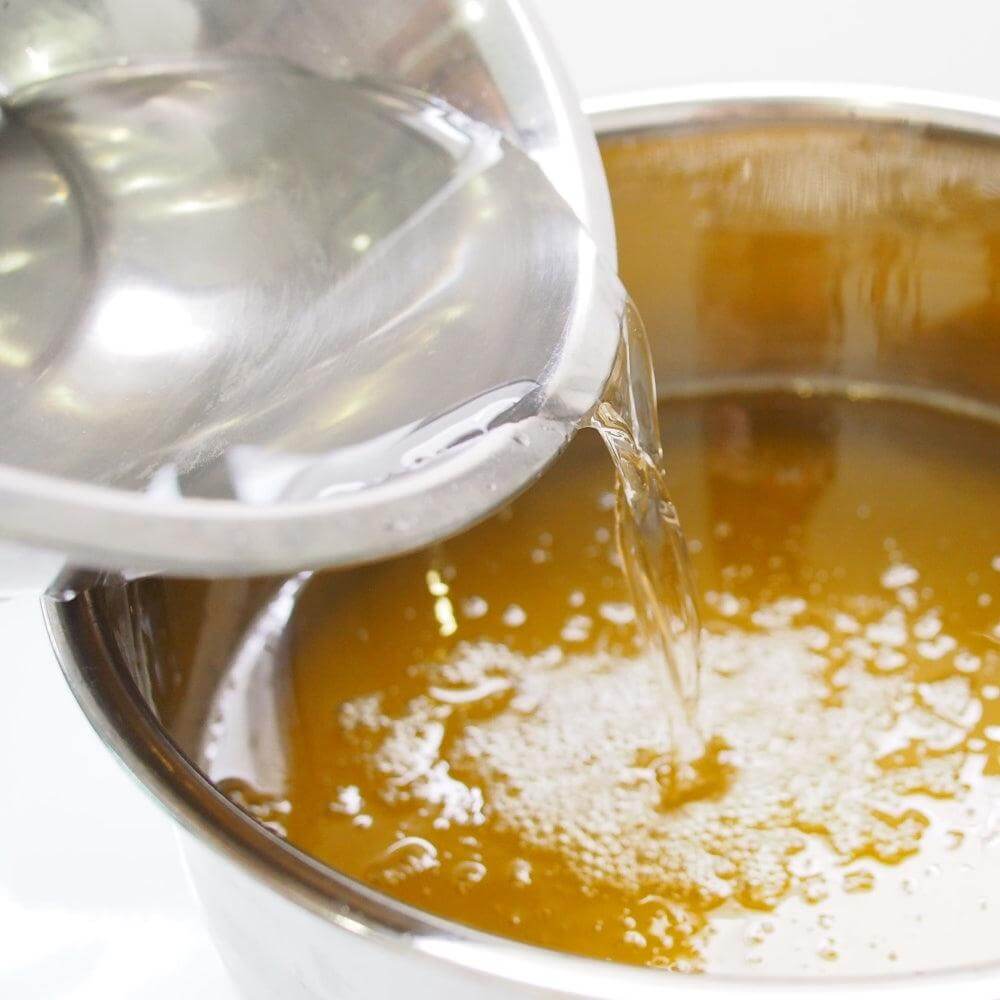
- Warm the water. Weigh the distilled water into your container. Warm water helps the powders dissolve.
- Add the powders. Weigh and add the sodium metabisulfite and the sodium thiosulfate, then stir until the liquid is clear.
- Bottle and label. Pour it into a bottle with a tight cap and label it with the name and date.
How much to use
Mix the stabilizer into your fragrance oil before you add the fragrance to your batter. Soapmakers who use this recipe go by how dark the fragrance gets:
- Turns brown to dark brown: up to equal parts stabilizer and fragrance by weight. For 1 oz of fragrance, up to 1 oz of stabilizer.
- Only tans: about half as much stabilizer as fragrance. For 1 oz of fragrance, about 0.5 oz of stabilizer.
- By vanillin percentage: match the stabilizer to the fragrance's vanillin. A fragrance with 10% vanillin gets 0.1 oz of stabilizer per 1 oz of fragrance.
The stabilizer is mostly water, so it adds a little liquid to your recipe. If you use a lot, you may want to hold back a little water from your lye solution.
What to expect
- Test it first. Results depend on the fragrance, how much vanillin it has and your recipe. Make a small batch, and keep an unstabilized bar beside it so you can compare the color at one, four and eight weeks.
- A chalky film can form. One soapmaker saw a chalky coating on the bars, which planed off cleanly. Watch for it in your test batch.
- It can crystallize in the bottle. As water evaporates, crystals can form. Metabisulfite crystals dissolve again with a gentle swirl. Thiosulfate crystals need gentle warming.
- It isn't a fix for every color problem. It only helps with vanillin. For other color changes, see our Soap Color Troubleshooting guides.
Want us to take a look?
Not sure if a fragrance will brown your soap? Check it with Fragrance Check. Already made the soap and the color went wrong? Contact us or email your photos to support@nurturehandmade.com.